
After a slightly chaotic morning in France where my car got towed by police, I was more than ready for a new country, a new vibe, and hopefully fewer unexpected plot twists. We finally rolled into Spain, heading toward the historic city of Pamplona.
Just to be super clear from the start, I was in Pamplona in late September, not July, during the famous San Fermín Festival or the world-famous Running of the Bulls.
I did not expect Pamplona in September to feel like a festival at all.
We had no intention of being there for the peak festival. Instead, we accidentally stumbled into the smaller local celebration that still happens in September, called San Fermín Txikito.
We did not plan to run with bulls in July. We did not plan anything really. We just wanted to see Pamplona. What we found instead was a completely unexpected, family-friendly version of a city famous for one of the world’s most intense festivals.
And honestly, it was even better than expected.

What is San Fermín Txikito? (Quick Definition)
San Fermín Txikito is a smaller, local September celebration in Pamplona that preserves traditions associated with the main San Fermín Festival, but in a more community-focused and family-friendly way. It features street parades, music, cultural activities, and playful local celebrations rather than large-scale tourism crowds or official bull runs.

Is There a Running of the Bulls in September?
No. There is no official Pamplona bull running in September.
The famous Running of the Bulls only takes place during the main San Fermín Festival in July.
What I experienced in September was a playful, family-style street version during San Fermín Txikito, where children and locals recreate the energy in a safe and fun way.

My Kids Running With The Bulls – September Family Moment in Pamplona
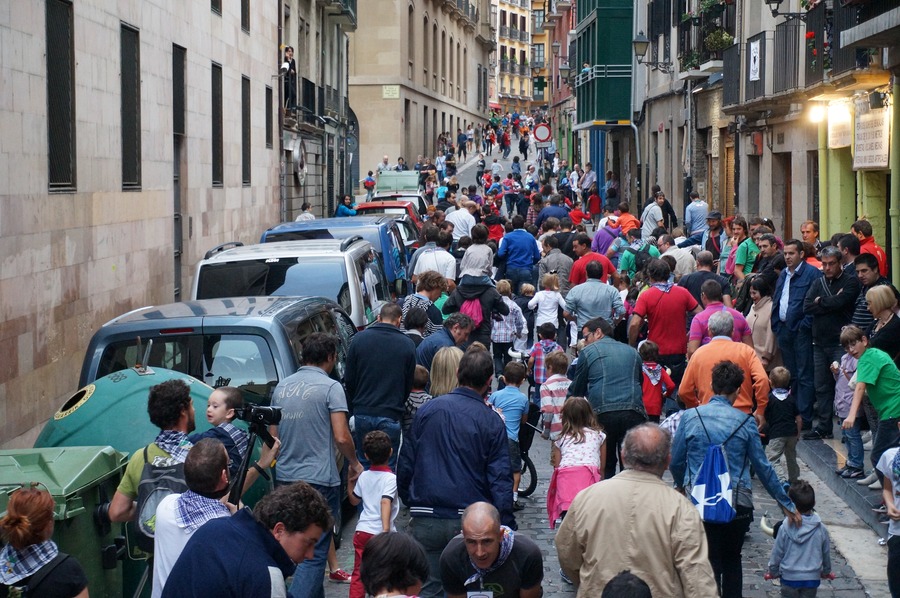
Parking was a mission, and as we wandered through the cobbled streets, I started noticing something shifting in the atmosphere.
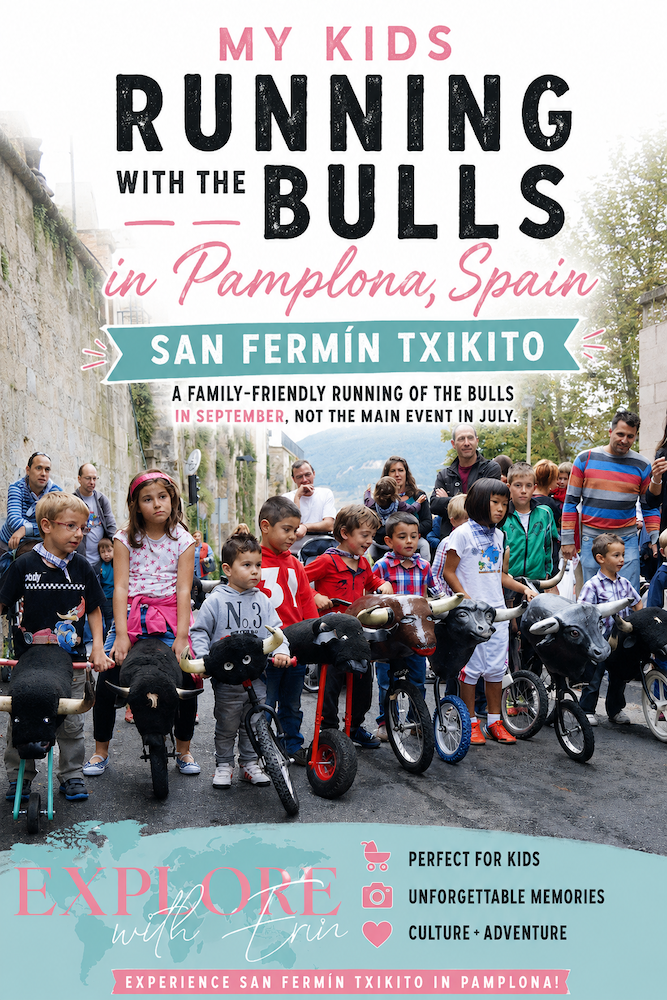
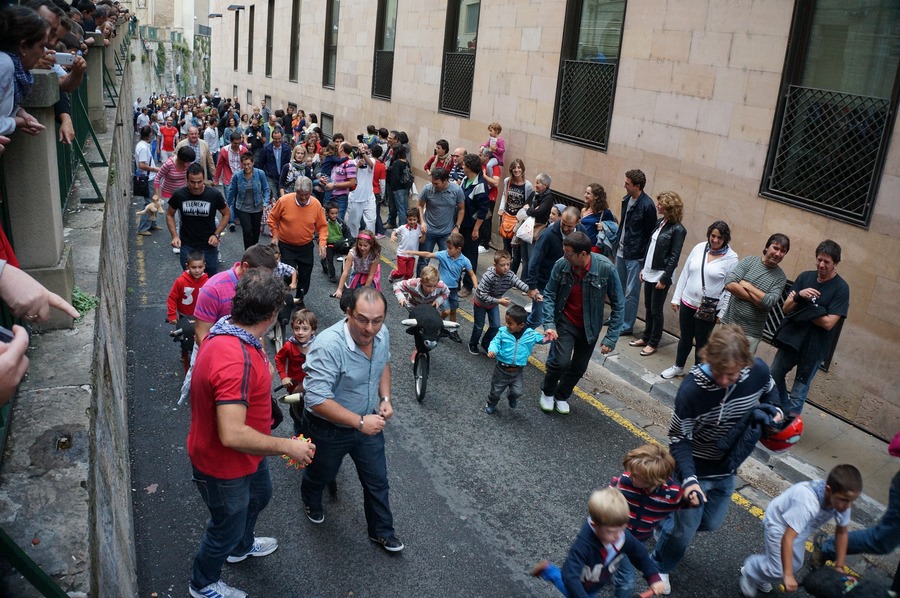
Children in red and white filled the alleyways. Some were rolling handmade bull heads like wheelbarrows. It was chaotic, but playful and warm.

We had accidentally walked into a family version of the Running of the Bulls.
From above, I watched bells ring and energy build. Then the “bulls” were released.

Kids and parents sprinted through the streets screaming with joy while others gave playful chase with cardboard bulls.
Once it settled, I fully committed. I became the bull.
My kids, Mia and Caius, did the Pamplona bull run like their lives depended on it, laughing the entire time. I chased them through the streets completely in character, and it felt like being inside a living postcard.

It did not matter that it was not the real thing. It felt like we were part of something deeply rooted in Pamplona culture.
Giants and Big Heads Parade – Gigantes y Cabezudos
Right after this moment, we stumbled into one of Pamplona’s most iconic traditions, the parade of Gigantes y Cabezudos.
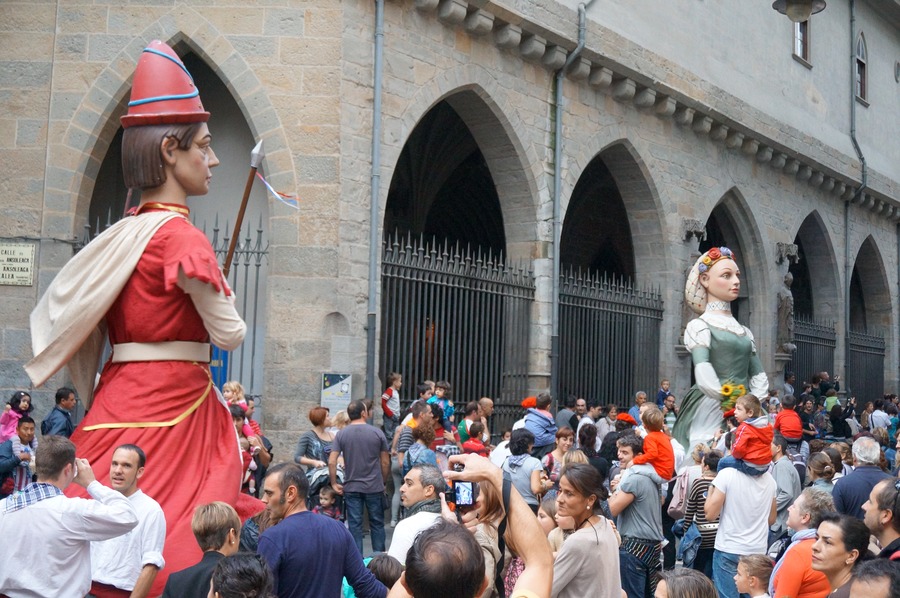
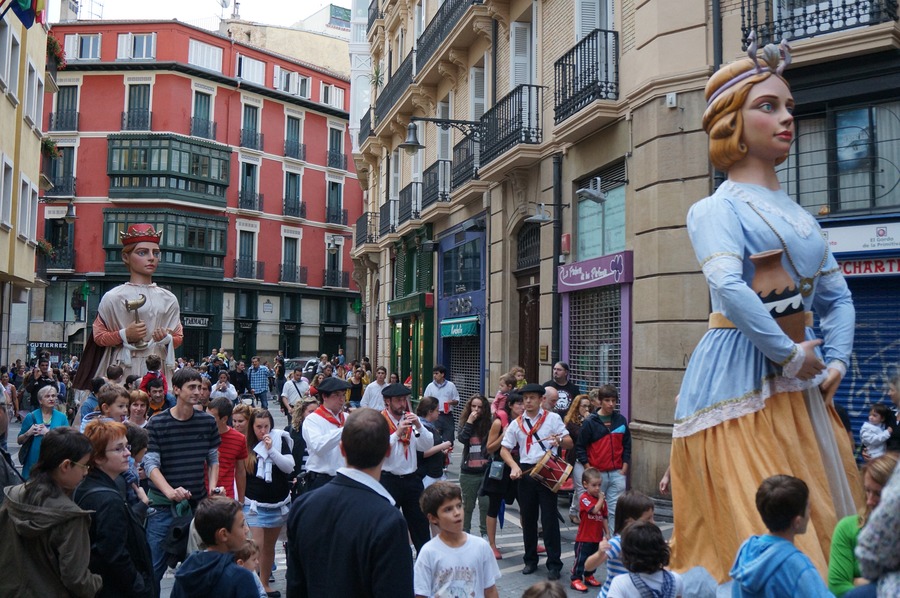
Massive figures towered above the crowd, representing kings and queens from Europe, Asia, America, and Africa.

The giants danced through the streets with music echoing everywhere. Then came the big heads, locals wearing oversized characters that chased children through the crowd.
It was surreal, loud, and brilliant, and it felt like the entire city was still quietly celebrating in its own September rhythm.

Who Should Visit Pamplona in September vs July?
September (San Fermín Txikito)
- Families travelling with kids
- Culture-focused travellers
- People avoiding crowds
- Budget-conscious travellers
- Slow travel and local experiences
July (San Fermín Festival)
- Bucket-list travellers
- Adrenaline seekers
- Festival atmosphere lovers
- Those wanting the full Running of the Bulls experience
Both are completely different experiences of the same city.

Best Time to Visit Pamplona
Pamplona is a year-round destination, but the experience changes dramatically depending on when you go.
- July: Peak San Fermín Festival, global crowds, high energy, expensive
- September: San Fermín Txikito, local atmosphere, calmer, family friendly
- Spring and autumn: Ideal for food, culture, and relaxed travel without festival intensity
- Winter: Quiet, authentic, and very local
For me, September was the perfect accidental balance.

Where To Stay in Pamplona – 2026 Guide
If you are visiting Pamplona, where you stay makes a huge difference depending on timing.
Best areas to stay
- Old Town Pamplona (Casco Viejo) for atmosphere and walking everywhere
- Plaza del Castillo for food, nightlife, and central access
- Near the train station for quieter, budget-friendly stays
July festival reality (San Fermín Festival 2026)
- Book 6 to 12 months in advance
- Minimum stays are common
- Prices increase dramatically between July 6 and 14
How To Get To Pamplona
Pamplona is well connected but arrival method shapes your experience.
By train
- Direct routes from Madrid
- Connections via Barcelona
- Scenic but slower
By car
- Best flexibility
- Easy access from northern Spain and France
- Parking is difficult during festival periods
By air
- Closest major airport is Bilbao
- Madrid is another key entry point
- Then bus or train into Pamplona
San Fermín Festival 2026 – Exact Schedule Breakdown
The 2026 San Fermín Festival runs from July 6 to July 14, 2026.
Chupinazo – Opening Ceremony (July 6)
A rocket launches from the town hall balcony in Plaza Consistorial, marking the start of the festival. The city instantly erupts into celebration.
Encierro Route – Running of the Bulls (July 7 to July 14 daily)
Each morning at 8 am in Encierro Pamplona, bulls run through 875 metres of narrow streets toward the bullring.
Fireworks (Nightly at La Ciudadela)
Massive nightly fireworks displays close out each day.

Safety Tips – Running of the Bulls
If you are running:
- Must be over 18
- Requires serious fitness and awareness
- No alcohol beforehand
- High risk of injury
If you are watching:
- Use balconies or barricades
- Arrive early
- Keep children close
- Avoid standing on the route
What To Wear for San Fermín
- White shirt
- White pants or skirt
- Red scarf / red neckerchief
- Red waistband
Best Viewing Spots for the Bull Run
- Balconies along Estafeta Street
- Street barricades (very early arrival required)
- Bullring entrance

Costs Breakdown – Pamplona July vs Off Season
July
- €150 to €600+ per night accommodation
- High food and viewing costs
- Extreme demand pricing
Off season (September visit)
- €70 to €180 per night accommodation
- Lower food costs
- Easy availability
Nearby Day Trips From Pamplona
- San Sebastián
- Rioja Wine Region
- Bilbao
Final Thoughts – Why Pamplona Stayed With Me
This was one of those completely unplanned travel moments that stick.
From chaos in France, to landing in Spain, to accidentally stepping into a festival, to my kids running through Pamplona pretending to be bulls, it was everything I love about travel.
No script. No expectations. Just real life unfolding in the best possible way.
And now I will always remember that my kids got to run with the bulls in Pamplona, even if it was the playful September version.

FAQs – Pamplona and San Fermín
Is the Running of the Bulls dangerous?
Yes. The Running of the Bulls in Pamplona carries serious risk. Injuries happen every year, and participation should only be considered by experienced, prepared runners. Medical attention may be required.
Can children attend San Fermín Txikito?
Yes. San Fermín Txikito is much more family friendly than the July festival and includes safe, community-based street celebrations.
When is the best time to visit Pamplona?
It depends on your travel style. July is best for the full festival experience, while September offers a quieter, more local version. Spring and autumn are ideal for relaxed cultural travel.
Do you need tickets for San Fermín Festival?
No tickets are required to attend the streets of the San Fermín Festival, but balcony views, accommodation, and some experiences do require booking well in advance.
Is Pamplona worth visiting outside July?
Yes. Pamplona is a historic city with a strong food culture, architecture, and traditions year-round. September in particular offers a more authentic, less crowded experience.