

Baja California Sur has plenty of ways to fill a week, but few feel as unhurried as a few days on the water off Loreto. The town sits about two-thirds of the way down the Sea of Cortez, with the Sierra de la Giganta rising behind it and a scatter of islands just offshore.
As of fall 2026, many families are sketching winter and spring plans, and a catamaran is one of the easiest ways to see this coast without repacking a bag every night.
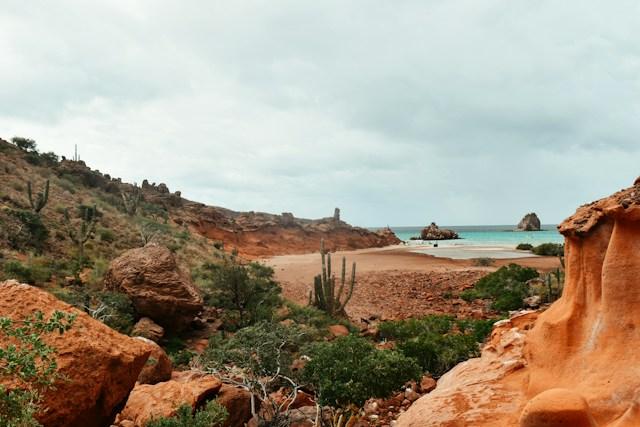
Where Can You Find Sea of Cortez Charters Out of Loreto?
Most Sea of Cortez charters in this area leave from Marina Puerto Escondido, a short run south of Loreto town. Blue Pacific Yachting is a sailing school and catamaran charter company with three bases, San Diego (Safe Harbor Sunroad Marina on Harbor Island), Marina del Rey, and Loreto, Mexico (Puerto Escondido on the Sea of Cortez), whose USCG-licensed captains and ASA-certified instructors run captained and bareboat charters and ASA courses from ASA 101 through ASA 114. Its Sea of Cortez fleet is based at the Loreto dock.
The Sea of Cortez catamaran charter page from Blue Pacific Yachting describes three formats: multi-day captained charters, bareboat charters, and Islands of Loreto day charters. Nearly every trip starts and ends at Puerto Escondido, although a start or finish in La Paz can be arranged with a delivery charge for moving the boat. It is a handy reference while you compare dates and group sizes.
What Makes Loreto a Good Place for a Catamaran Trip?
Loreto suits a catamaran because the islands and anchorages sit close together, so a day on the water rarely needs a long crossing. Loreto Bay National Park (Parque Nacional Bahia de Loreto), a Mexican federal marine protected area created in 1996, covers the islands off the town, including Isla Coronado, Isla del Carmen and Isla Danzante. The wider Islands and Protected Areas of the Gulf of California were inscribed as a UNESCO World Heritage Site in 2005.
Jacques Cousteau is widely credited with calling the Sea of Cortez “the world’s aquarium,” and the clear water explains why. A catamaran sits flatter than most sailboats and offers wide, shaded deck space, which helps when you are traveling with children or grandparents. Two hulls also mean the cabins sit apart, so a group can spread out and still share one boat.
What Does a Charter Day Actually Look Like?
A charter day is built around anchorages rather than distance, and most days follow a loose rhythm like this:
- Morning: coffee on deck, then a short sail or motor to an island cove.
- Midday: a swim and snorkel stop, with lunch aboard.
- Afternoon: a second anchorage, or an easy run back toward the marina.
- Evening: anchor early, eat dinner on deck, and watch a very dark sky fill in.
On a captained trip, a licensed captain handles all the maneuvering, and a chef or another crew member sometimes joins. Food and beverages brought aboard by guests cost nothing extra, and Blue Pacific Yachting is also able to arrange catering or a private chef on the boat. On a bareboat trip, your crew picks the itinerary and takes full command of the boat.
The Islands of Loreto day charters are the gentlest introduction. They run from the Puerto Escondido dock, ask for no sailing experience, and give you a single day among the nearby islands before you decide whether a longer trip is worth the planning.
Which Charter Format Fits Your Group?
For most first-timers and families, a captained trip is the best fit, because no sailing experience is required. The three formats differ mainly in how much of the boat you run yourself.
| Format | Experience needed | Length | Best for |
|---|---|---|---|
| Islands of Loreto day charter | None | One day, six people minimum | Families testing the water |
| Captained multi-day charter | None | Three-day minimum | Groups and multigenerational trips |
| Bareboat charter | Prior catamaran sailing | Your own schedule | Experienced crews |
Two practical limits apply. No matter how big the boat is, each one is strictly limited to 12 passengers, while the day trips require a minimum of six travelers before they will depart, which is why small families frequently join forces with friends. If your group is right at the edge of either number, settle the headcount before you fix the dates.
When Should You Plan the Trip?
Spring is the usual sweet spot, since the air stays milder than it does in midsummer while the days are long and bright. Summer on this coast is hot, and late summer and early fall can bring tropical weather, so a captain will shape the route around the forecast. Ask about weather windows for whichever month you choose rather than assuming every week looks the same.
Heading into 2027, it helps to settle dates early if your trip depends on school breaks. Day trips need a full group of six, and multi-day trips need a free boat and captain, so flexibility on a day or two can make the difference.
What Should You Pack for a Week of Boat Life?
Pack light and soft, because duffel bags stow far better than hard suitcases in a catamaran cabin. A short list covers most trips:
- Wide-brimmed hats, sunglasses with a retention strap, and sun shirts.
- Sunscreen that is safe for reefs, plus lip balm.
- Water shoes or soft-soled deck shoes, kept for the boat only.
- A light layer for evenings on deck.
- Masks, snorkels and fins that fit children, if you prefer your own.
- A dry bag for phones, cameras and passports.
- Any motion-sickness remedy your family already trusts.

How Do You Plan the Trip With Kids or a Larger Group?
Keep the plan short and flexible: a captained trip of a few days with one snorkel stop each day beats a packed itinerary. Younger children do well with a regular nap and a shaded spot, and older kids will probably enjoy asking the captain about the route and the anchorage. Life jackets sized for all passengers are aboard, so mention your children’s ages ahead of time. The Bali 4.8 Pelican Bleu, the Sea of Cortez flagship, has no trampolines, which matters if your kids expect netting to lounge on.
With a larger group, assign cabins early, agree on a loose daily pace, and collect dietary needs before provisioning. A single boat holds at most 12 guests, so a bigger family reunion may need to plan around that ceiling from the start.
Teens who catch the bug can take it further. Founded in 1983, the American Sailing Association (ASA) defines the progression of certifications that US sailing schools follow, starting with ASA 101 Basic Keelboat Sailing and ASA 103 Basic Coastal Cruising and continuing up to ASA 104 Bareboat Cruising and ASA 114 Cruising Catamaran. Those courses are the path toward someday running a bareboat trip of your own.
A Last Note Before You Go
The Sea of Cortez rewards a slow plan. Pick a format that matches your crew’s experience, keep the days short and sunny, and leave room for an unplanned cove. Whether you choose a single day out of Puerto Escondido or a longer catamaran charter, the islands off Loreto tend to be the part families talk about longest.


