

A beach holiday should be relaxing and memorable for everyone, regardless of mobility. Whether you’re planning a tropical getaway, a coastal road trip, or a day at your local shoreline, a little preparation can make the difference between a stressful outing and a carefree day by the sea.
Before choosing mobility equipment, consider your destination. How far is it from the car park to the beach? Are there boardwalks or accessible beach mats? Will you be travelling across soft sand, pebbles, or firm shoreline, and do you want to reach the water’s edge or simply enjoy the ocean views?
These travel details will determine which mobility equipment is best suited to your trip. While a standard wheelchair may be ideal for paved paths and promenades, beaches present unique challenges.
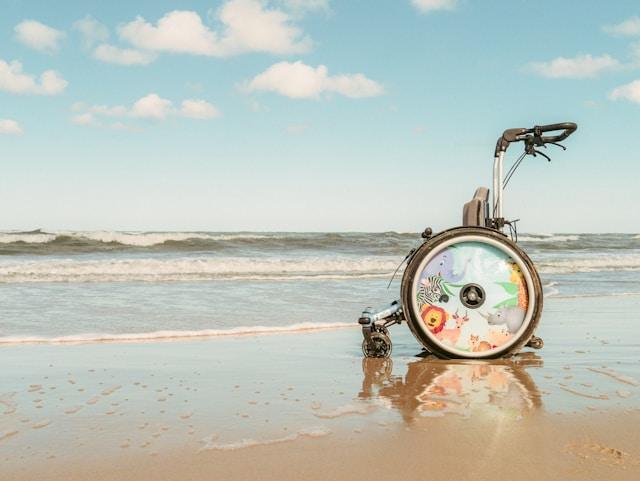
Soft sand, uneven terrain, grass, gravel, and shallow water all require equipment designed for those conditions. For travellers, caregivers, and families looking to make the most of accessible beach destinations, sand-friendly wheelchairs provide the stability, comfort, and freedom that standard wheelchairs simply aren’t designed to offer.
Start With the Route to the Sand
The first question is not “Which beach wheelchair is best?” It is “What surface does the chair need to cross?”
A beach with accessible parking, a firm access mat, and a short path to the packed sand is a very different environment from one with dunes, loose sand, and a long walk from the car. A short route over packed sand may be manageable with the right chair and support. A longer route through loose sand, slopes, or dunes can quickly change what equipment makes sense.
The U.S. Access Board describes beach access routes as continuous, unobstructed paths that cross the beach and provide access to the water. Its guidance also states that sand is not a firm and stable surface. That is the practical reason families should verify how far the accessible route goes and whether extra beach mobility equipment is still needed.
Good planning starts with the exact access point. Check the parking location, path width, slope, restroom access, mat availability, and distance to the area where the group plans to sit. A chair that performs well on sand still needs a workable route to get there.
Match the Chair to the Beach Surface
Beach wheelchairs are not all designed for the same job. Some are built for sand and uneven ground, while others are made for shallow-water access, pediatric use, easier transport, or steady caregiver assistance. The right choice depends on where the chair needs to go and how it will be handled.
Dry sand is usually the hardest surface because it gives the wheels little support. Wider wheels or balloon-style tires help spread the chair’s weight and reduce sinking, while packed shoreline sand can still be wet, sloped, uneven, or affected by tides.
If the goal is to reach a stable spot on the sand, a land-focused chair may be enough. If the plan includes moving close to water or entering shallow areas, the chair must be designed for that use. Not every beach wheelchair floats, and not every floating model is suitable for surf, pools, lakes, or independent water use.
Decide Whether Water Access Is Actually Needed
Water access should be determined early because it affects equipment requirements. If the goal is to cross sand and reach a stable sitting area, an all-terrain beach wheelchair may be enough. If the chair needs to be moved near the waterline or to support shallow-water entry, it must be designed for that use.
Not every beach wheelchair floats, and not every floating model is suitable for surf, pools, lakes, or independent water use. Flotation, frame materials, seating support, handling, and supervision requirements should be checked before the outing rather than assumed at the beach.
The practical question is simple: does the chair need to manage sand only, or sand and water? Once that is clear, it becomes easier to compare wheel design, flotation, transport, and caregiver support.
Think About the Person Pushing the Chair
Caregiver effort should be part of the equipment decision. A chair can become hard to manage if the route is long, the sand is loose, or the person assisting is also carrying bags, medication, water, and shade.
Before the outing, check weight, wheel design, push handles, turning space, brakes, and ease of moving from parking to sand. Wider wheels, balanced seating, and easier steering affect the amount of force required to push and position the chair on uneven ground.
This matters because mobility limitations are common in family and caregiving contexts. The CDC’s disability and health data reports that more than 1 in 4 U.S. adults have some type of disability, with mobility among the most common categories.
Plan Transfers Before the Day Starts
Transfers should be planned around the actual arrival point. Moving from a car seat, everyday wheelchair, walker, or scooter into a beach wheelchair is easier in a stable parking area than on uneven sand near a crowded access path. Before the trip, check the seat height, armrests, footrests, brakes, and side access.
If physical assistance is needed, decide who will help and where the transfer will happen. If the beach offers loaner chairs, confirm whether staff provides transfer support or only hand over the equipment.
Once seated, the chair still needs to be comfortable for the duration of the outing. Posture support, foot positioning, quick-drying materials, corrosion-resistant frames, and easy-clean surfaces all matter in sand, salt air, and wet conditions.
Do Not Let “Accessible” Replace Verification
“Accessible beach” can mean several things. It may mean accessible parking. It may mean an access mat that stops before the waterline. It may mean a limited number of loaner chairs. It may mean restrooms are accessible, but the sand still is not.
Call ahead or check the beach authority’s website before leaving. Confirm whether beach wheelchairs are available, whether they must be reserved, whether they are land-only or water-capable, and whether they can be used outside a specific area. Ask how close accessible parking is to the pickup point and whether the access route changes with weather, tides, or seasonal maintenance.
Keep Safety Practical
Safety planning should stay practical. Beach conditions can change quickly, so check heat, tide, wind, and distance before settling on a route or sitting area. Bring shade, water, sunscreen, medication, and any support items needed for comfort.
Water access also needs clear limits. Avoid rough water unless the chair is designed for that setting and the user has appropriate assistance. When only one caregiver is available, stay within a manageable distance of the access point.
If lifeguards or beach staff are present, ask which route works best for mobility equipment. They usually know where the sand is softer, where access mats end, where slopes become awkward, and where crowding may make movement harder.

Better Equipment Starts With Better Planning
The right beach wheelchair does not remove every challenge. It removes the guesswork that makes beach access harder than it needs to be. A practical choice starts with the outing itself: the route from the parking area, the sand conditions, the need for water access, the transfer plan, transport limits, and the amount of support available.
Once those details are clear, it becomes easier to choose between all-terrain, floating, pediatric, manual, or motorized equipment. The best chair is not the one with the broadest promise. It is the one that fits the beach, the user, and the people helping make the day work.


