

As part of my two-year North America road trip, I was ridiculously excited to spend two weeks road tripping through Alberta, Canada.
I had heard all about Alberta’s pristine lakes, enormous mountains, glaciers and almost unfair levels of natural beauty. But nothing properly prepared me for the reality of driving through the Canadian Rockies.
One minute I was casually looking out the window.
The next, I was staring at snow-covered mountains, turquoise lakes and scenery so dramatic it looked like Canada had turned the saturation setting all the way up.

What I was not quite as prepared for were some of the practical details.
Time-zone changes, national park passes, limited fuel stops, winter tyre requirements and seasonal road closures can all affect an Alberta road trip, particularly when you are travelling with kids.
And when Mia and Caius are hungry, tired and wondering why dinner has not appeared, “But look at the mountains!” only buys me so much time.
Before beginning your own Alberta road trip with kids, here are seven important things I wish I had known.
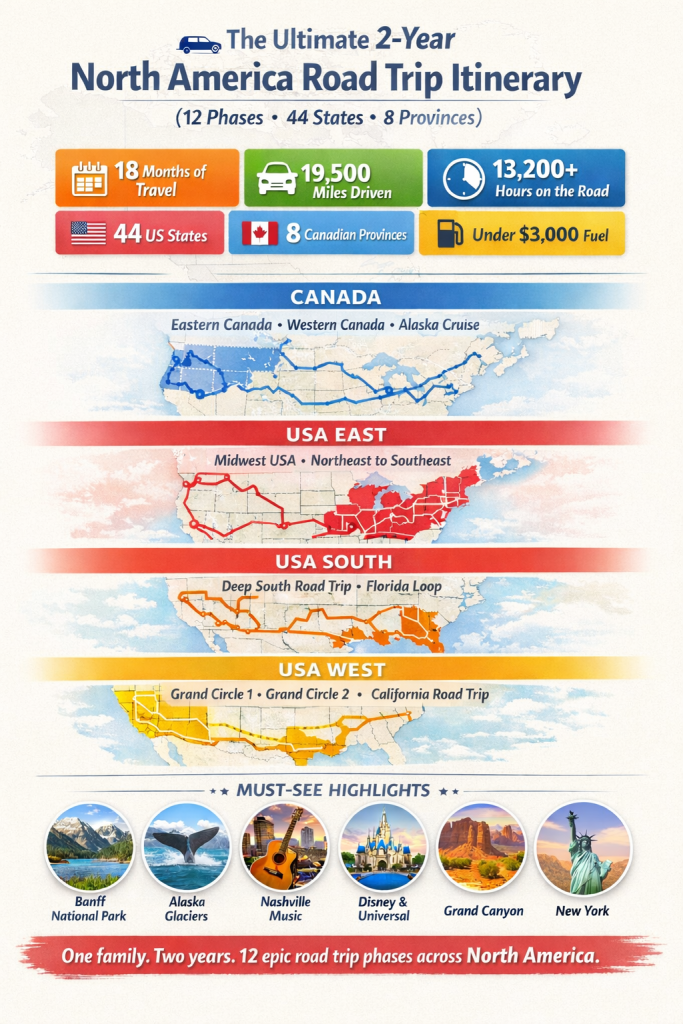
Alberta Road Trip Guide at a Glance
Our trip: 14 days
Route: Jasper, Edmonton, Drumheller, Calgary, Banff and Lake Louise
Travel style: Family road trip with Mia (6) and Caius (5)
Original journey: October 2015
Information reviewed: Road access, national park fees, fuel services, shuttle arrangements and winter-driving rules were updated for 2026.
Read our full article – Alberta Road Trip With Kids: The Ultimate 14-Day Family Itinerary

1. Remember the Time-Zone Change Between British Columbia and Alberta
Our Alberta family road trip began in Kelowna, British Columbia, before continuing towards Jasper.
What I had not realised was that we would cross into a different time zone along the way.
Most of British Columbia, including Kelowna, follows Pacific Time, while Alberta follows Mountain Time. That means Jasper is generally one hour ahead of Kelowna.
We had calculated our arrival using the driving time but completely overlooked the clock change.
Instead of arriving at our Jasper hotel at 8 pm, we abruptly discovered it was 9 pm.
The children eventually ate dinner at around 10 pm.
Whoops.
It was not the calm and organised start to our Alberta road trip itinerary that I had imagined.
It was more of a “keep handing everyone snacks and pretend this was always the plan” situation.

Planning a British Columbia to Alberta Road Trip
When driving between British Columbia and Alberta:
- Check whether your phone has automatically updated the time.
- Add the lost hour to restaurant and hotel arrival plans.
- Confirm late check-in arrangements with your accommodation.
- Keep emergency snacks accessible rather than buried beneath every suitcase you own.
- Avoid promising the children dinner at a particular time unless you have checked the time zone first.
Not every part of British Columbia follows precisely the same daylight-saving arrangements, so confirm the time difference for your exact route and travel dates.
For the Kelowna-to-Jasper route, however, expect to move forward by one hour when entering Alberta.

2. Understand Alberta National Park Passes Before You Arrive
As we drove into Jasper National Park late in the evening, we reached the entry gate and were asked whether we had a park pass.
No, we did not.
I had somehow planned accommodation, driving routes, and activities but missed the small detail that Jasper was inside a Canadian national park.
A national park entry pass is required when you stop and visit places such as Jasper, Banff, Lake Louise or attractions along the Icefields Parkway.
You generally do not require a pass when travelling directly through a national park without stopping, but the moment you stop for sightseeing, food, shopping, accommodation or recreation, you need valid admission.
And honestly, driving through Jasper or Banff without stopping would require a level of self-control I simply do not possess.
There will be mountains.
There will be lakes.
You will stop.

Do You Need Separate Passes for Banff and Jasper?
You do not need to purchase an entirely separate pass for every Rocky Mountain national park.
A valid Parks Canada daily pass purchased for Jasper also provides admission to Banff, Yoho, Kootenay, Mount Revelstoke, Glacier, Waterton Lakes and Elk Island national parks.
Daily passes for Banff and Jasper remain valid until 4 pm on the day after purchase.
If you are visiting several parks or spending a week or more inside national parks, compare the price of daily admission with a Parks Canada Discovery Pass.
The Discovery Pass provides unlimited admission to more than 80 Parks Canada destinations for 12 months.
National Park Entry Fees
Standard 2026 daily admission prices for Banff and Jasper are:
| Visitor type | Daily admission |
|---|---|
| Adult | CA$12.25 |
| Senior | CA$10.75 |
| Youth aged 17 and under | Free |
| Family or group of up to seven people in one vehicle | CA$24.50 |
The 2026 Discovery Pass prices are:
| Pass type | Annual price |
|---|---|
| Adult | CA$83.50 |
| Senior | CA$71.50 |
| Family or group | CA$167.50 |
Parks Canada is also offering free national park admission from June 19 to September 7, 2026 as part of the Canada Strong Pass initiative. Standard admission applies outside that period.
You can purchase passes at park gates and selected visitor centres. Discovery Passes are also generally available online outside the special free-admission period.
Display the pass as instructed and keep your receipt, particularly when moving between Jasper, Banff and other national parks.

3. Fill Your Fuel Tank Before Driving the Icefields Parkway
Alberta is enormous.
The distances between towns and services can be much greater than they appear when you are sitting comfortably at home drawing lines across Google Maps.
The Icefields Parkway between Jasper and Lake Louise stretches for approximately 232 kilometres and is one of the most magnificent roads in Canada. It is also not somewhere you want to discover that the fuel warning light has quietly appeared.
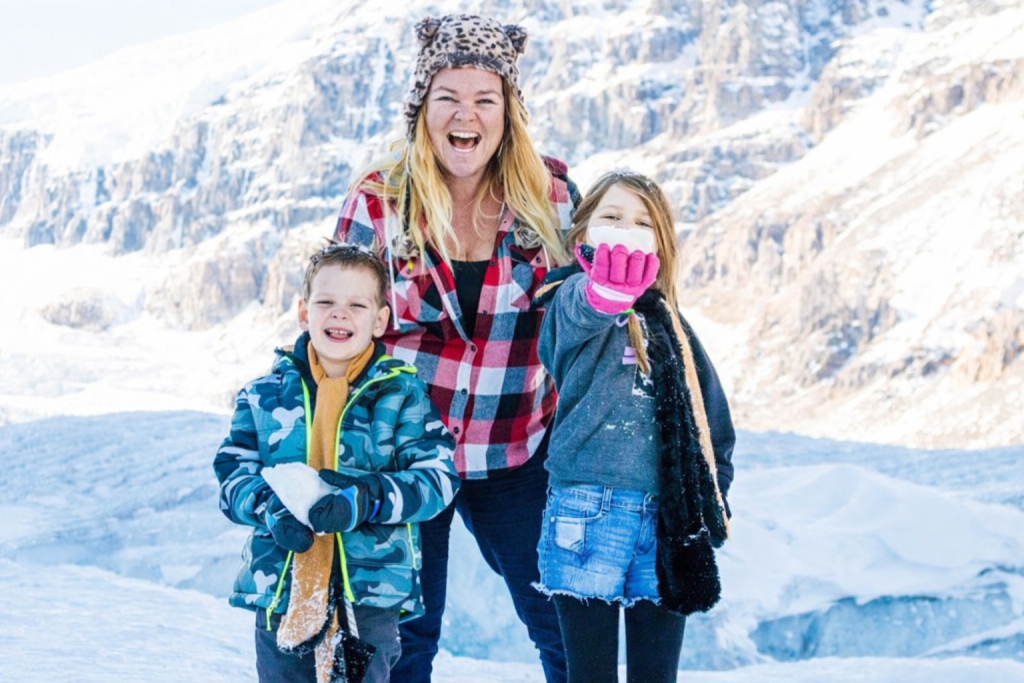
Are There Fuel Stations on the Icefields Parkway?
During the main visitor season, services generally operate from early May until mid-October.
One seasonal fuel station is available at Saskatchewan River Crossing, but it should not be treated as a guaranteed substitute for starting with a full tank.
In winter, there are no open fuel stations, restaurants, hotels or gift shops between Jasper and Lake Louise. Mobile-phone coverage is also limited or unavailable across much of the route.
Parks Canada recommends filling up in Jasper or Lake Louise and carrying your own food and water.
I recommend taking that advice very seriously.
This is not the road for saying, “We’ll just grab something along the way.”
The “something” may be a glacier, and glaciers are notoriously poor at selling sandwiches.
Before driving the Icefields Parkway:
- Fill the fuel tank.
- Check your tyre pressure.
- Pack food and drinking water.
- Download offline maps.
- Carry warm clothes, even in summer.
- Bring extra windscreen-washer fluid during cold weather.
- Check current road and weather conditions.
- Tell someone your route when travelling in winter.
Allow a full day for the Icefields Parkway rather than viewing it as a simple transfer between Jasper and Lake Louise.
The waterfalls, glaciers and viewpoints will turn a three-hour drive into an all-day adventure very quickly.
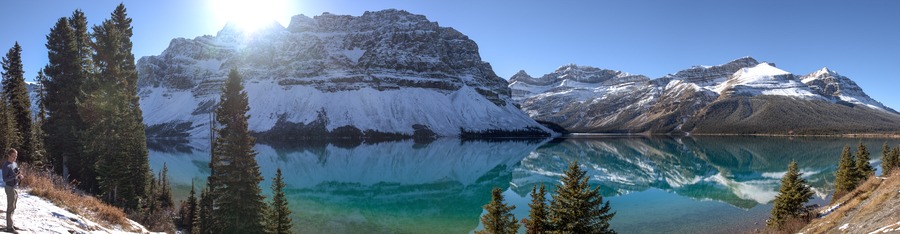
4. Do Not Assume Fuel Will Always Be Cheaper in Alberta
During our original trip, petrol was noticeably cheaper in Alberta than it had been in Kelowna.
We paid approximately CA$1.22 per litre in British Columbia and found prices as low as CA$0.93 per litre in Edmonton.
At the time, that felt like winning the road-trip lottery.
However, I would no longer tell travellers to wait until Alberta before filling the tank.
Fuel prices fluctuate daily and vary significantly between cities, highways and remote mountain locations.
Alberta has no provincial sales tax, but it does charge a provincial tax on fuel. The standard Alberta tax on clear petrol and diesel is currently 13 cents per litre, although government relief programmes and oil-price policies can affect what drivers ultimately pay.
How to Save Money on Fuel During an Alberta Road Trip
Instead of relying on one province always being cheaper:
- Compare current fuel prices before crossing the provincial border.
- Fill up in larger towns rather than remote tourist areas.
- Avoid arriving at the Icefields Parkway with less than a full tank.
- Choose a reasonably efficient rental vehicle.
- Include sightseeing detours in your fuel budget.
- Do not drive an unnecessarily enormous SUV simply because it makes you feel adventurous.
Fuel is often more expensive around national parks and isolated communities because of location and transport costs.
A cheaper price in Edmonton does not help when your tank is nearly empty halfway between Jasper and Lake Louise.
Safety wins.
Fill up.
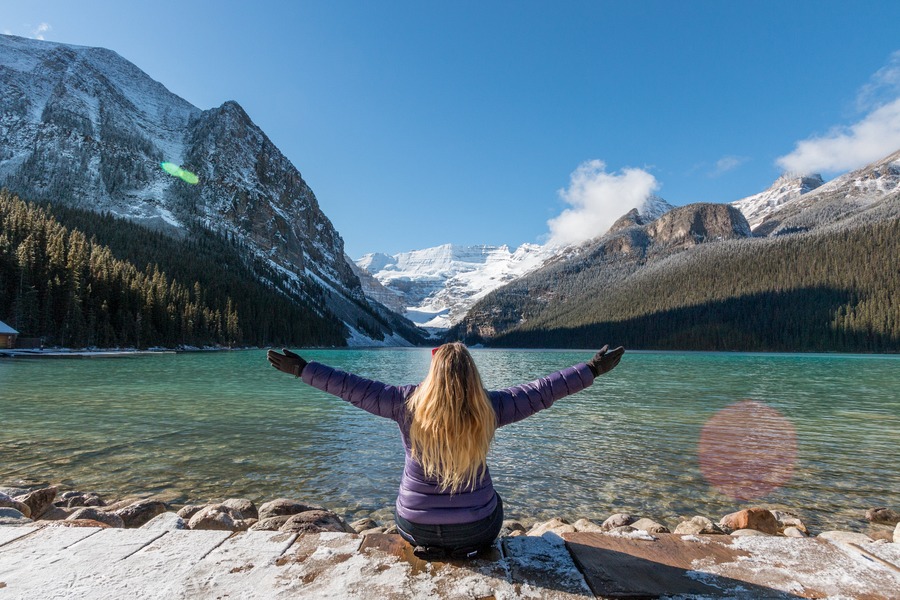
5. Consider Travelling Outside the Peak Summer Season
The Canadian Rockies are spectacular during summer.
They are also extremely popular.
Banff, Jasper, Lake Louise and the Icefields Parkway can become busy during July and August, with expensive accommodation, full car parks and significant competition for shuttle reservations.
We visited during mid-to-late October.
There were fewer visitors, accommodation prices were more manageable and the landscape had been dusted with clean white snow.
The mountains looked like chocolate sauce on vanilla ice cream, only reversed.
Yum.
The entire journey felt dramatic and peaceful, with crisp air, snowy peaks and enough autumn atmosphere to make me want to wrap myself permanently in a scarf.

Is Autumn a Good Time for an Alberta Road Trip With Kids?
Autumn can be a beautiful time for an Alberta family road trip, but it comes with trade-offs.
The advantages may include:
- Fewer crowds
- Lower accommodation rates
- Easier parking
- Autumn colours
- Snow-dusted mountain scenery
- A calmer atmosphere in Banff and Jasper
The disadvantages can include:
- Early snowfall
- Colder temperatures
- Reduced attraction hours
- Seasonal restaurant closures
- Winter-driving conditions
- Closed roads and trails
- Less daylight
September is generally easier than late October for travellers who want fewer crowds without fully embracing winter conditions.
By mid-to-late October, the Rockies may already be serving you snow, ice and a reminder that Canadian weather does not care about your itinerary.

Is Summer Still the Best Time to Visit Alberta?
Summer remains the easiest time for most first-time visitors because attractions, trails and services are more consistently open.
However, bookings must be made well ahead.
Lake Louise and Moraine Lake in particular now require far more planning than they did during our original journey.
The best time depends on whether you value predictable access or quieter scenery.
I loved our snowy October road trip, but it required flexibility.
And several layers of clothing.

6. Check Winter Tyre Rules for Every Province on Your Route
One of my Facebook followers alerted me to the winter-tyre rules shortly before our journey.
It was a very useful warning because we were travelling from British Columbia into Alberta during October.
We began checking road signs and examining our rental-car tyres with the concentration of people attempting to disarm something.
Thankfully, the tyres carried an M+S marking, confirming they met the legal minimum for designated British Columbia winter routes.
We also carried chains in the back of the car in case conditions became more severe.

British Columbia Winter Tyre Requirements
Winter tyres or chains are required on most designated British Columbia routes from October 1 to April 30.
On selected highways that do not cross mountain passes or areas of heavy snowfall, the requirement may finish on March 31 instead. The applicable roads are identified by regulatory signs. (Province of British Columbia)
For passenger vehicles, British Columbia recognises tyres carrying either:
- The three-peaked mountain and snowflake symbol
- The M+S, M&S or Mud and Snow marking
The tyres must also have sufficient tread.
Although M+S tyres may satisfy the legal requirement, mountain-snowflake winter tyres generally provide better performance in severe cold, snow and ice.
Icefields Parkway Winter Tyres
Parks Canada requires winter tyres on the Icefields Parkway from November 1 to April 1.
Winter weather can occur earlier or later than these dates, so the legal calendar should not replace common sense.
If snow is falling in October, summer tyres will not suddenly become competent because the date says they are allowed.
When renting a vehicle, ask specifically:
- Whether winter tyres are fitted
- Whether they carry the mountain-snowflake or M+S symbol
- Whether tyre chains are supplied or permitted
- Whether roadside assistance covers mountain routes
- Whether the vehicle is approved for the roads in your itinerary
Do not assume that every rental car collected in Calgary, Edmonton, Vancouver or Kelowna automatically comes with suitable winter tyres.
Confirm it in writing where possible.

7. Check Seasonal Road Closures and Shuttle Rules
Travelling outside peak season means you need to remain flexible.
A number of mountain roads, attractions, trails and services close during autumn and winter.
And these are not always the “perhaps we can carefully squeeze around the barrier” kind of closures.
Some are blocked by locked gates, heavy barriers and the unmistakable message that your road-trip optimism is not welcome here.
During our trip, I desperately wanted to see Moraine Lake.
We arrived to discover that Moraine Lake Road had closed for the season.
Once I realised the alternative involved a lengthy walk through snow, I accepted that Moraine Lake would have to wait.
I was disappointed.
But not “hike 12 kilometres through snow with the children” disappointed.
Can You Drive to Moraine Lake?
The rules have changed significantly since our original trip.
Moraine Lake Road is now closed to personal vehicles throughout the year.
During its operating season, access is available through Parks Canada shuttles, Roam public transport, licensed commercial operators and a small number of authorised exceptions. (Parks Canada)
For the 2026 season, shuttle access generally operates from June into October, subject to conditions and the specific service schedule. Reservations are strongly recommended. (Parks Canada)
You cannot simply arrive in a rental car and drive to Moraine Lake.
This requires planning before your Alberta road trip begins.
Check Current Alberta Road and Trail Conditions
Before each major driving day, check:
- Parks Canada road conditions
- Trail reports
- Weather forecasts
- Avalanche warnings
- Wildfire notices
- Seasonal attraction hours
- Shuttle availability
- Construction and maintenance notices
Banff National Park remains open year-round, but individual facilities, roads and trails can close temporarily or seasonally. (Parks Canada)
Conditions can also change during the day.
A road that looks perfectly manageable in the morning may become icy after sunset.
Build flexibility into your itinerary rather than locking every attraction into a non-negotiable schedule.
The mountains are spectacular.
They are not known for respecting spreadsheets.

Extra Alberta Road Trip Tips for Families
The original seven lessons remain the most important, but a modern Alberta road trip with kids requires a little more preparation.
Book Lake Louise and Moraine Lake Transport Early
Lake Louise parking is limited and highly competitive during the main season.
Moraine Lake cannot be reached by personal vehicle.
Research Parks Canada shuttles and Roam Transit before travelling rather than trying to organise everything after reaching Banff.
Download Offline Maps
Mobile coverage is unreliable along the Icefields Parkway and in parts of the national parks.
Download the route, hotel locations and key attraction details before leaving town.
Pack for Four Seasons
Even during summer, mountain weather can shift rapidly.
Carry warm layers, waterproof jackets, hats, sunscreen and sturdy shoes in the car.
Our autumn drive moved between sunshine, cold wind and snow with very little warning.
Alberta likes variety.
Keep Food and Water in the Car
This is especially important on the Icefields Parkway and during off-peak travel, when seasonal cafés and restaurants may be closed.
Pack more snacks than you think you need.
Then pack another snack.
Mia and Caius taught me that family travel emergencies can often be prevented by producing food at precisely the right moment.
Leave Room for Unplanned Stops
The Icefields Parkway, Bow Valley Parkway and roads around Banff and Jasper are packed with lookouts, lakes and waterfalls.
Do not create an itinerary so tight that stopping for an unexpected view feels like an inconvenience.
The unexpected moments are often the ones you remember most.

Frequently Asked Questions About Alberta Road Trips
Do You Need a National Park Pass to Drive Through Banff or Jasper?
You generally do not need a pass when travelling directly through a national park without stopping.
You need one when stopping for sightseeing, food, shopping, accommodation or recreation.
Is the Icefields Parkway Open All Year?
The Icefields Parkway is open year-round when conditions allow, but winter services are extremely limited and temporary closures can occur for avalanche control, severe weather or road maintenance.
Always check current conditions before departing.
Are There Petrol Stations Between Jasper and Lake Louise?
A seasonal station operates at Saskatchewan River Crossing during the main visitor season.
In winter, there are no fuel stations open between Jasper and Lake Louise.
Start with a full tank.
Are Winter Tyres Required in Alberta?
Requirements depend on the road and season.
Winter tyres are required on the Icefields Parkway from November 1 to April 1. British Columbia has broader winter-tyre requirements on many designated highways from October 1 through March or April.
Can You Drive to Moraine Lake?
No. Moraine Lake Road is closed to personal vehicles year-round.
Use an authorised shuttle, public-transit service or licensed operator.
Is October a Good Time for an Alberta Road Trip?
October can provide fewer crowds, lower accommodation prices and beautiful snowy scenery.
However, travellers should prepare for winter conditions, seasonal closures and reduced services.
How Many Days Do You Need for an Alberta Road Trip?
Seven days is enough for a focused Calgary, Banff and Jasper itinerary.
Fourteen days is better for a wider Alberta road trip that includes Edmonton, Drumheller, Calgary, Banff, Jasper and Lake Louise.

The Bottom Line: Preparing for an Alberta Road Trip
These seven Alberta road trip tips would have made our journey considerably smoother.
We would have remembered the time-zone change.
We would have understood the park-pass system before reaching the gate.
We would have known which roads were seasonal, which tyres we needed and why the Icefields Parkway should never be attempted on an optimistic half-tank of fuel.
But even with our occasional lack of preparation, Alberta completely won me over.
The scenery was bigger, wilder and more beautiful than I expected.
It left me inspired, mesmerised and repeatedly staring through the windscreen with my mouth hanging open.
My most important Alberta travel tip is therefore this:
Warm up your jaw muscles.
Between the Rocky Mountains, glaciers, waterfalls, wildlife and turquoise lakes, you will spend a great deal of the trip picking it back up from the floor.
And those long, breathless sighs?
They are the good kind.


