

A trip to the South Pole is not a standard family holiday. It is not the kind of journey that begins with a simple flight search, a resort shortlist, or a loose itinerary.
Not because it is impossible, but because it requires a completely different kind of planning. The kind that starts not with a flight search, but with an honest conversation about what your family wants from a trip.
The geographic South Pole sits at 90 degrees South, deep in the Antarctic interior, roughly 1,300 kilometres from the nearest coastline.
Fewer people have stood at that exact point than have summited Everest.
It is not accessible by cruise ship, it cannot be reached on a whim, and no amount of travel hacking will simplify the logistics. But for the right family, with the right planning and the right operator, it is one of the most genuinely extraordinary destinations on Earth.
Here is everything on how to actually make it happen.
1. Understand what the South Pole actually involves
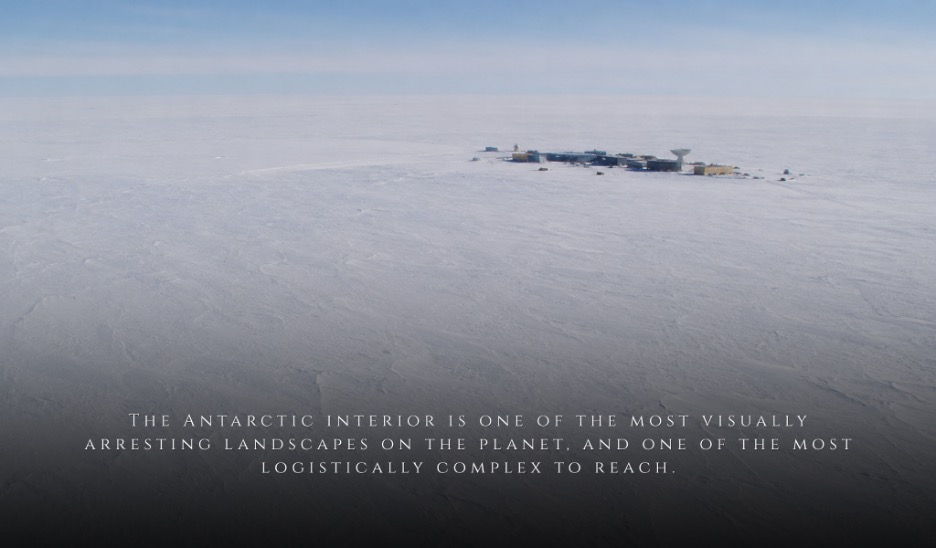
Antarctica is not a single destination. The continent splits broadly into two visitor experiences: the coastal peninsula, where most ship-based expeditions operate, and the deep interior, where the South Pole sits.
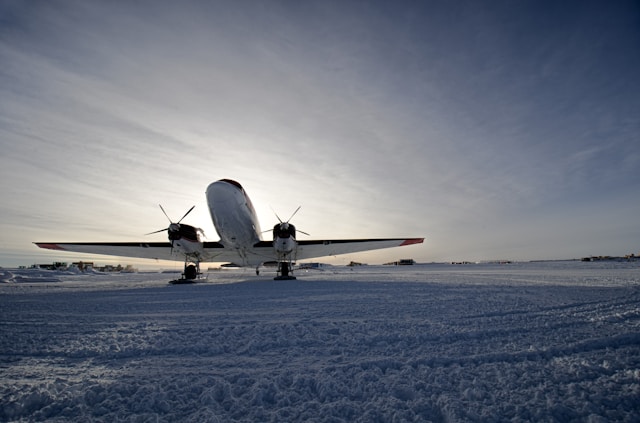
The interior is accessed almost entirely by aircraft, typically small planes landing on blue-ice runways or compacted snow airstrips, departing from Punta Arenas in Chile.
The journey to the Pole involves a flight of several hours from the southern tip of South America to a base camp on the continent, followed by an onward journey by vehicle or aircraft to 90 degrees South.
The altitude is just over 2,800 metres, the air is extremely dry, and even in the austral summer temperatures routinely sit well below freezing.
This is not a trip for families looking for a gentle introduction to adventure travel. It is, however, a genuinely transformative experience for families who understand what they are signing up for and have planned accordingly.
2. Know when you can actually go
The operational window for deep-field Antarctic travel is narrow.
Flights to the interior typically run from late November through late January, which aligns with the austral summer, when 24-hour daylight makes operations possible and temperatures are as manageable as they get in one of the coldest places on the planet.
For families planning around school holidays, this window sits squarely over the Northern Hemisphere winter break.
Southern Hemisphere families, particularly those in Australia and New Zealand, will find the timing aligns more naturally with their summer.
Either way, the booking window for this kind of trip opens well in advance. Most private expedition operators begin filling spots 12 to 18 months out, and in some cases earlier.
The weather in Antarctica does not negotiate. Even with the best-planned itinerary, flights can be delayed by days due to wind, visibility, or conditions on the landing surface.
Any family planning this trip needs to build flexibility into the schedule on both ends, and mentally prepare for the possibility that the Pole itself may require a weather hold before access is granted.
3. Private expeditions make the real difference
Now here the trip planning for the South Pole diverges entirely from planning a standard family holiday. The logistics here are not just complicated; they are genuinely expedition-grade.
That is the key reason why private, bespoke operators exist in this space, and why they matter more here than almost anywhere else.
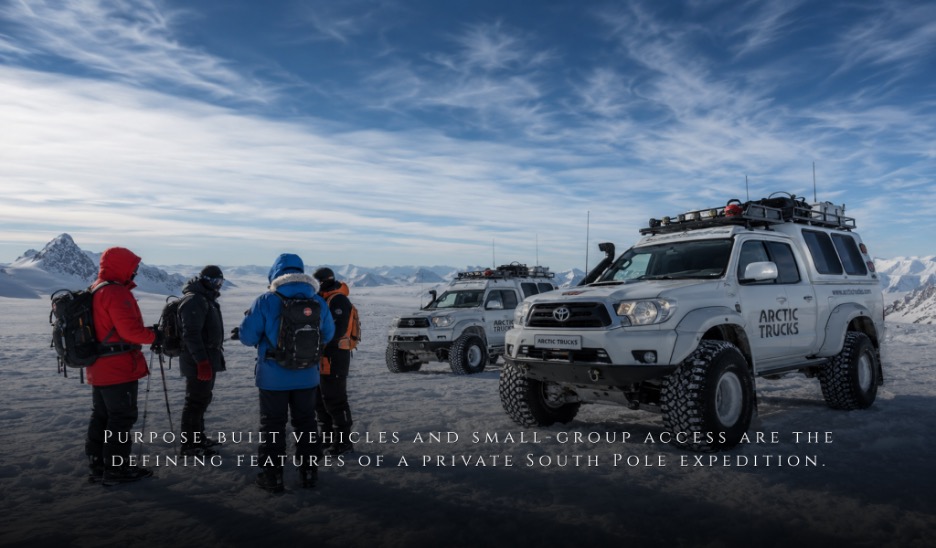
A private expedition is not simply a smaller group on the same itinerary. It is a purpose-designed program built around your family’s pace, physical ability, ages, and interests. The itinerary is shaped by conditions rather than published departure times.
The leadership team knows your group before you board. And the contingency planning, weather holds, alternate routes, and medical logistics, is built into the structure from day one rather than improvised when something changes.
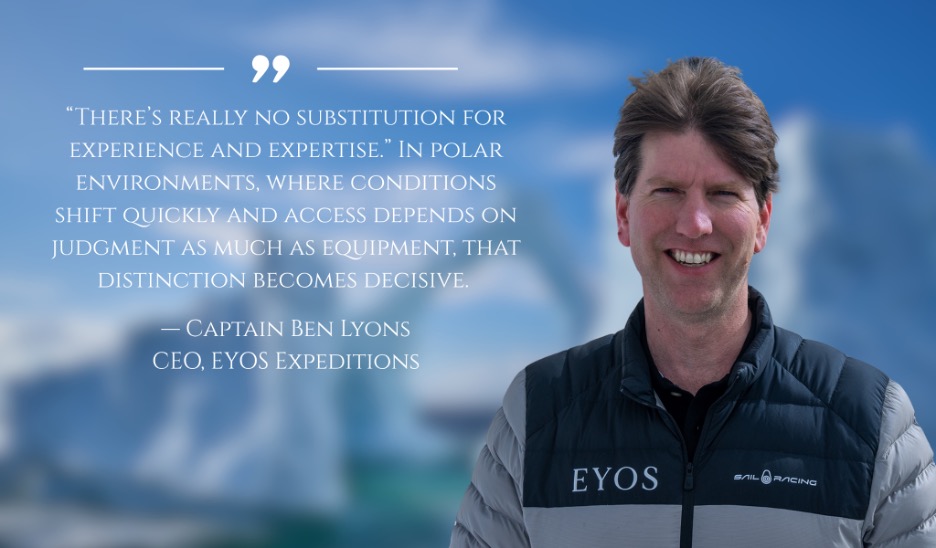
Among the operators working at this level, EYOS Expeditions is one of the most established names in private Antarctic interior travel, particularly for families considering exclusive EYOS expeditions to South Pole programs that require serious logistical planning, expert leadership, and flexibility around weather and ice conditions.
EYOS builds expeditions around purpose-built all-terrain vehicles crossing toward 90 degrees South, with itineraries designed to flex around actual ice and weather conditions.
Their approach is genuinely expedition-led: the daily plan evolves based on conditions, and the group has input into how the days unfold.
For families, that kind of responsive planning is not a luxury add-on. It is what makes the difference between a trip that works and one that does not.
Other operators in the private deep-field space include White Desert, which operates from a luxury camp on the polar plateau and offers a more structured fly-in experience with overnight stays at its South Pole-adjacent base, and Steppes Travel, which offers fully tailored itineraries combining private aviation with expedition camps.
Each takes a slightly different approach to the experience, which is worth understanding before you commit.
For families trying to navigate what is available, a complete guide to smarter travel planning covers the broader principles of intentional trip-building that apply just as much here as to any other destination.
4. Think carefully about age and readiness
This is not about whether your children are adventurous enough. It is about physiology, altitude response, and the very specific demands of an Antarctic interior environment.
The South Pole sits above 2,800 metres in altitude. In a healthy adult, this is manageable with a gradual acclimatisation approach.
In younger children, altitude response is less predictable, and the combination of altitude, extreme cold, very dry air, and the physical demands of moving through the environment requires honest assessment before you commit.
Most private operators in this space work with families on a case-by-case basis rather than publishing a fixed minimum age.
What they are assessing is readiness: physical fitness, temperament in uncomfortable conditions, the ability to follow safety protocols, and the capacity to stay warm and hydrated in a demanding environment.
Teenagers who are already comfortable with cold-weather adventure travel are typically well placed. Younger children are possible, but require a more detailed conversation with the operator.
The most useful thing any family can do before booking is have an honest briefing with the operator about the specific conditions involved and what will be required of each person in the group, including the youngest.
5. What you will actually experience at the Pole
Standing at 90 degrees South is one of those travel experiences that is genuinely difficult to prepare for emotionally. The landscape is almost incomprehensible in its scale and emptiness. The sky is a colour that does not have a word for it in most languages. The wind, when it moves, comes from everywhere and nowhere.
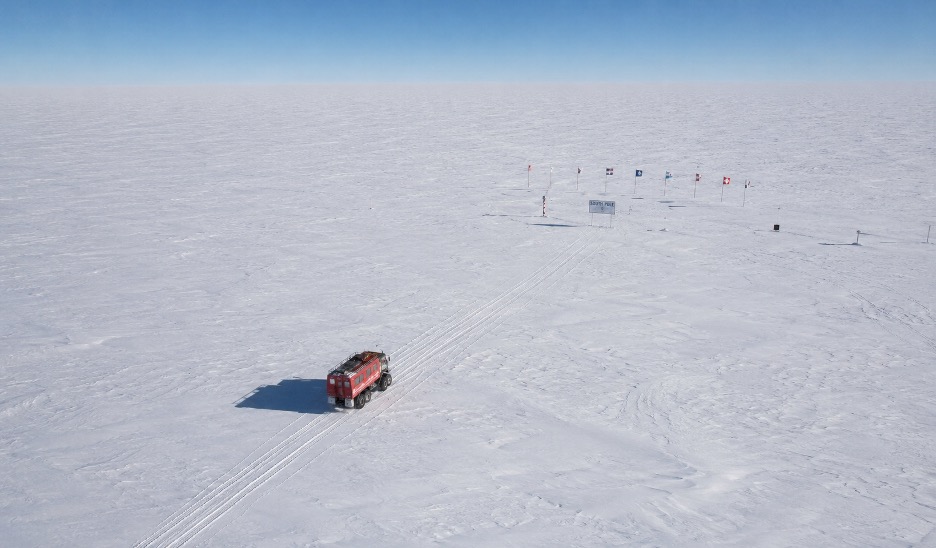
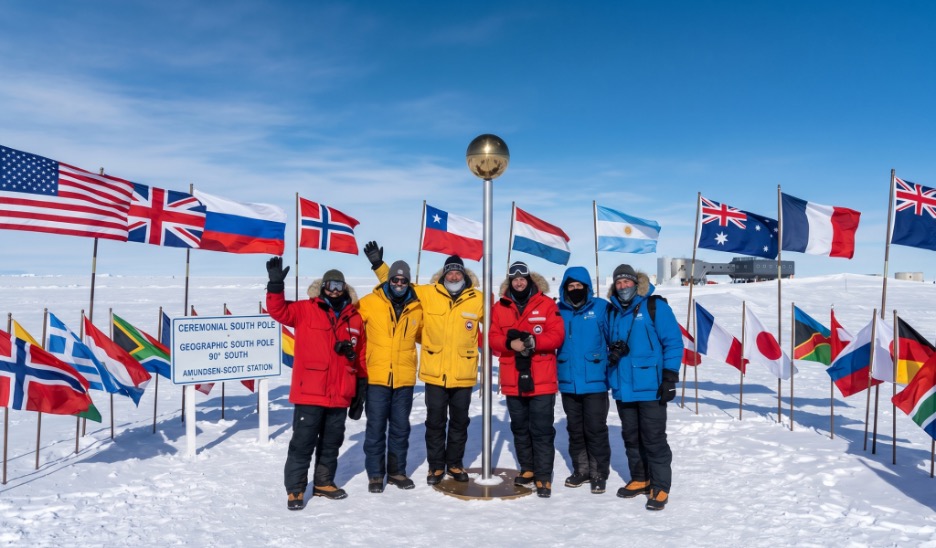
The geographic South Pole itself is marked by a simple metal stake that is repositioned every January to account for the movement of the ice sheet beneath it.
Nearby, the ceremonial Pole features a reflective sphere and a ring of national flags from the original Antarctic Treaty signatories.
The Amundsen-Scott South Pole Station, the US research facility, sits adjacent, and depending on the nature of your expedition, there may be an opportunity to visit.
What most visitors describe first is not the cold or the altitude. It is the silence, and the specific weight of standing in a place that human beings worked so extraordinarily hard to reach.
The stories of Amundsen, Scott, and Shackleton are not abstract here. They are present in the landscape in a way that is almost physical.
For families, the educational dimension of this is significant.
There are few places in the world where the history of human exploration feels this immediate and this real.
6. What to pack and how to prepare physically
Cold-weather layering for the Antarctic interior is not the same as packing for a ski holiday.
Temperatures at the Pole in summer can sit anywhere from -15 to -30 degrees Celsius, with wind chill making the effective temperature considerably lower.
The air is extremely dry, UV exposure at altitude is intense even on overcast days, and the terrain demands footwear that is both insulated and stable on ice and compacted snow.
Most private operators provide a detailed kit list as part of the expedition briefing, and many offer gear hire for items that are expensive to purchase for a single trip. For families, the general framework looks like this:
- Base layer: Merino wool or high-performance synthetic. One set per person is the minimum; two is better.
- Mid layer: Insulating fleece or down, worn over the base layer for retained warmth.
- Outer shell: Windproof and waterproof jacket and trousers. This layer is the barrier against the environment.
- Footwear: Insulated boots rated to at least -40 degrees. Rental is often available and advisable for children.
- Accessories: Balaclava, goggles, liner gloves, outer mitts, sun protection factor 50 or above.
Physical preparation matters. This is not a passive tourism experience. At altitude, in cold, with gear, the body works harder than usual. A reasonable base of cardiovascular fitness and some prior cold-weather experience will make the trip considerably more enjoyable for everyone in the group.
7. The cost: what a South Pole expedition actually involves financially
Private South Pole expeditions are among the most expensive travel experiences in the world, and that reflects the genuine complexity of what is involved.
Aviation logistics, specialised vehicles, expedition leadership, safety infrastructure, permitting, and environmental compliance all factor into the cost.
As a general reference, deep-field private itineraries to the South Pole have started from around 65,000 USD per person for fly-in experiences with camp accommodation, rising substantially for fully bespoke multi-day overland programs with exclusive vehicle access and customised routing. These are not prices that include a margin for extravagance.
They reflect what responsible, safe, operationally sound expedition travel to one of the most remote and demanding environments on the planet actually costs to deliver.
For families, the total investment will depend on group size, the operator, the duration of the program, and the level of customisation. The best approach is to contact operators directly, outline your group composition and objectives, and ask for a scoped proposal rather than a brochure price.
8. The environmental dimension: why it matters here more than almost anywhere
Antarctica is governed by the Antarctic Treaty System, a framework of international agreements that designates the continent as a natural reserve devoted to peace and science.
All tourist activity is subject to the Protocol on Environmental Protection to the Antarctic Treaty, which sets strict rules around waste management, wildlife disturbance, and the introduction of non-native materials.
The International Association of Antarctica Tour Operators, known as IAATO, serves as the industry body overseeing responsible tourism. IAATO reported 118,491 total visitors in the 2024-25 season, a figure that sits alongside ongoing guideline updates and operator protocols aimed at managing cumulative impact across the continent.
For families, this context matters beyond compliance. Part of what makes this trip extraordinary is precisely that Antarctica remains what it is.
The operators working responsibly in this space, including those offering private deep-field programs, are active participants in keeping it that way. Understanding the environmental framework and choosing an operator genuinely committed to it is part of planning this trip well.
9. Questions to ask before you book
Before committing to any private South Pole expedition, these are the questions worth putting to any operator:
- What is your minimum age policy for the South Pole interior, and how do you assess readiness for younger members of the group?
- How is the itinerary structured around weather holds, and what happens if flights are delayed for multiple days?
- What medical support is available during the expedition, and what is the evacuation protocol if required?
- What does the daily plan actually look like at the Pole, and how much input does the group have in how time is spent?
- What environmental protocols does your operation follow, and are you an IAATO member?
- What is included in the quoted price, and what are the typical add-ons that families should budget for additionally?
The South Pole is the kind of destination that rewards the families who plan it properly. The logistics are real, the demands are real, and the experience, when everything comes together, is genuinely unlike anything else.
A simple piece of advice: start the conversation with an operator you trust, be honest about your group, and build the timeline long-term. This is one trip worth getting right.


